

Nothing happened, which is what makes it hard to explain. There was no moment where you decided to stop drawing or writing or making things with your hands. You just have not done it in years.
You still buy the supplies sometimes. You still save the things you like.
Then you sit down to start and something in you begins evaluating before anything is on the page.
If you have been searching why did I stop being creative, I do not think you are asking how to become more talented. I think you miss who you were while you were making something, back when nobody was watching, including you.
Why did I stop making things when nothing bad happened?
Nothing had to go wrong for this to happen. Making things asks for uninterrupted attention and a tolerance for producing something bad, and adulthood removed both slowly. School rewarded getting it right and work rewarded outcomes, and somewhere in there your free hours turned into recovery hours.
The people I work with can usually point to the years this faded without being able to point to a reason. They were doing exactly what they were supposed to be doing. They took the hardest classes, chose the practical major, moved to the city with the opportunities, took the job that made sense on paper. Making things was the first thing to go because it was the only item on that list that did not count toward anything.
I hear a version of this often, where someone tells me they used to draw every day and now they barely do, and they say it with a kind of embarrassment, as though it proves they never really cared about it. I do not read it that way. When something you loved stopped being private, when it started having to be worth the time, most people set it down rather than stay and watch themselves ruin it.
Why does everything I make have to be good or useful?
Because you have spent years turning time into evidence. Evidence of competence, of progress, of being someone who uses her hours well. That instinct works at your job and it becomes painful when it reaches the parts of your life that were never supposed to produce anything.
So the reading has to be educational, the exercise has to show, the writing has to be publishable eventually, the hobby has to at least have the potential to become something. Nothing gets to just be.
There is usually a voice that arrives the second the materials are in front of you. It says the idea is derivative, that you are too old to be a beginner, that someone else already does this better and what were you planning to do with it anyway. Most people hear that voice as maturity. It sounds like good judgment.
In my work I would call that a part of you, and I would want to know what it thinks it is protecting. It almost always has a real history. Somewhere back there, making something imperfect where other people could see it cost you, and this part decided it would go first, before anyone else got the chance. It has been standing at that door ever since, and it does not know that the room it is guarding is the one place you were never being measured.
Why can't I lose track of time anymore?
Losing track of time asks for your attention to be in one place, and most of yours is still at work. You sit down to make something while carrying tomorrow's meeting, the email you did not answer, the low sense that you should be getting ahead. Absorption does not happen in a mind that is still on call.
As a kid, the activity decided when it was over. You stopped because you were hungry or because someone called you inside. Adult time for making tends to live in the gap between one obligation and the next, which means part of you is watching the clock the entire time, and watching the clock is the opposite of what you are trying to get back to.
The other thing running is the monitoring. There is a name for this state of absorption in the research and I am less interested in the name than in what goes quiet inside it, which is the part of you that stands off to the side narrating how you are doing.
You also cannot schedule it. I have watched people try, and the moment absorption becomes something to achieve by four o'clock, the managing part is already in the room with you.
Is this burnout, or is it something else?
It might be burnout and it might not. Being unable to make things is one of the places several very different experiences show up looking identical. Depletion from work, difficulty leaving work mentally, fear of making something bad, and the absence of any hour nobody has a claim on all produce the same silence.
One thing worth paying attention to is where the energy drops. If you feel real desire when you imagine making something and then go tense the moment the materials are actually in front of you, that points toward the evaluator rather than exhaustion. If the flatness has spread across everything, if nothing at all has felt good for a long stretch, that is a different conversation and it deserves a real one with someone.
There is also a possibility that has nothing to do with being tired. Sometimes a person has become so identified with the version of herself who performs and achieves and manages that there is no longer anywhere in her life she gets to exist without being useful. This is the stalled, in-between feeling I call languishing in adulthood, and it shows up in careers and relationships and also right here, in the fact that you cannot sit down and make something badly for an hour.
Can adults get that feeling back?
Yes, though not by trying harder at it. The capacity is still there. What it needs are the conditions childhood handed you for free, which are privacy from an audience, materials cheap enough that ruining them costs nothing, and permission to make something with no future attached to it.
In practice that often means choosing something that will not be posted, sold, gifted or shown to anyone, so the work stays an experience instead of becoming a statement about you. It helps to use a medium you are not already good at. A precise writer might use clay. Someone who designs for a living might cook without a recipe. Being inexperienced is useful when the whole point is that mastery is not the point.
Lower the value of the object too. Scrap paper, a child's paint set, leftover fabric. Expensive materials make every move feel consequential, and consequence is the thing you are trying to get out from under.
I know the shape of this because I stopped making things for years myself. It took a pandemic slowing me down before I picked any of it up again. I was in analysis at the time, I started making art for the first time since I was young, and it was genuinely not good, and it was the first thing in a long while that belonged only to me.
What we would actually look at in therapy
I would not assign you creative homework. The question I am interested in is what happens inside you when you try to do something that has no measurable purpose, and why purposeless feels closer to unsafe than to restful.
One person I worked with had followed the plan exactly and landed the high paying job in tech that was supposed to be the end of the wanting. She finished our work making clothes again, sewing in the evenings. What changed underneath it was that she could begin something without first deciding what it was going to be worth.
If any of this feels familiar, I would love to meet you. I work virtually only, with clients in California, Washington and New York, and with clients in the United Kingdom.
Cassie Weeden, MA, LMHC, LPCC. California LPCC #17397. Washington LMHC #LH61269164. New York LMHC #012037. BACP Registered Member, MBACP #415535
Questions people ask me about this
Why did I stop drawing as an adult?
Usually not because the desire left. Drawing asks for unbroken attention and a willingness to make something bad, and both got harder as your life filled with outcomes and obligations. For most people the stopping was gradual, and the thing that keeps them from starting again is the part of them that evaluates the result before there is a result.
Why do all my hobbies feel like work?
Because the same instinct that makes you good at your job followed you home. When you are practiced at turning hours into evidence of progress, leisure gets recruited into the same system, and the activity has to justify itself. What made hobbies feel like hobbies was that they did not have to.
Is loss of creativity a sign of burnout?
It can be. It can also be difficulty leaving work behind mentally, fear of producing something imperfect, or simply having no hour that belongs to you. Look at where your energy disappears. Wanting to make something and going tense once you start points somewhere different than having nothing left at all.
How do I create without being a perfectionist?
Separate making from judging, at least at the start. Do not require an idea, a finished piece or a standard from the first sitting. Perfectionism tends to loosen when the stakes of the object drop, so use materials you do not care about and keep the work private while it is still forming.
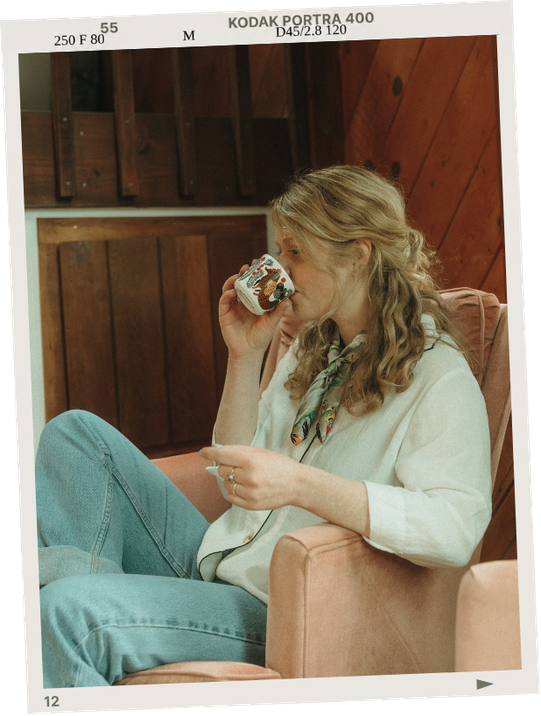
I am Cassie Weeden, MA, LMHC, LPCC
I am a licensed therapist and the founder of Creating an Integrated Self. I hold licenses in California (LPCC #17397), Washington (LMHC #LH61269164), and New York (LMHC #012037), and I am registered with the British Association for Counselling and Psychotherapy (BACP #415535) for clients in the United Kingdom. I have been in private practice since 2022, and Internal Family Systems has been the center of my work for the past several years, alongside analytical depth work for adults who feel stalled in their own lives. I named that experience languishing in adulthood after hearing the same story from client after client in Seattle, and after living it myself in a life that looked right on paper and never felt like mine. I work with adults navigating identity questions, life transitions, and anxiety, and every session is virtual. If something in this post felt familiar, you can book a free 20-minute consultation to see whether this work is a fit.